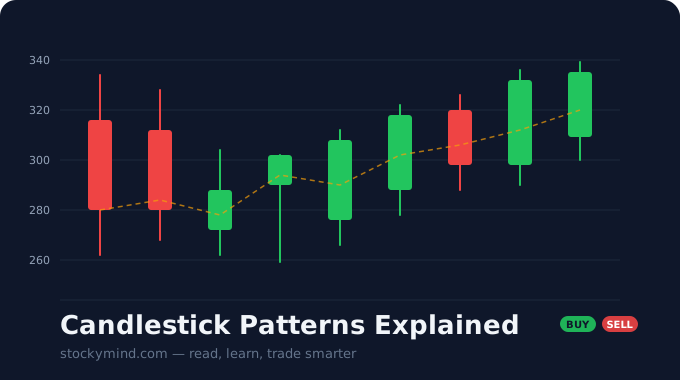
What Is a Candlestick?
Candlestick charts are one of the most popular ways to visualize price movement in financial markets. Originally developed by Japanese rice traders in the 18th century, they’ve become the go-to charting method for modern traders and technical analysts worldwide.
Each candlestick captures four critical data points for a given time period – the open, high, low, and close, and presents them in a visual format that makes price action and market sentiment easy to read at a glance.
Whether you’re looking at a 5-minute chart or a weekly chart, every candle tells a story about the battle between buyers and sellers during that period.
Anatomy of a Candlestick
Before diving into patterns, let’s break down the basic structure of a candlestick. Every candlestick has two main parts:
The Shadows (or Wicks) – The thin lines extending above and below the body, representing the high and low prices for that time period.Each candlestick captures four critical data points for a given time period – the open, high, low, and close, and presents them in a visual format that makes price action and market sentiment easy to read at a glance.
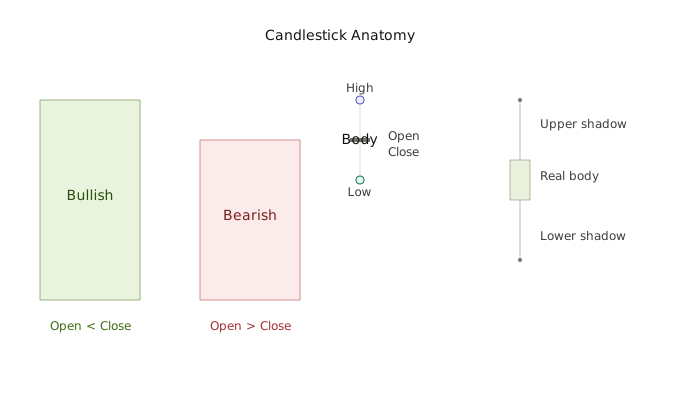
Not all candlesticks are created equal. The relative size of the body and shadows carries important clues about market sentiment.
- Long Body, Short Shadows Strong, decisive price movement.A long green candle means buyers were firmly in control. A long red candle means sellers dominated. There wasn’t much indecision and price moved in one direction with conviction.
- Short Body, Long Shadows The price opened and closed near the same level, but it swung significantly higher or lower during the period before snapping back. This signals indecision and potential conflict between buyers and sellers. Depending on where this appears on a chart, it can hint at a reversal.
Bullish Candlestick Patterns
These patterns signal that buying pressure may be taking over. Most powerful after a downtrend or at key support levels.
Bullish Engulfing Pattern
Two-candle pattern Reversal Appears after: Downtrend
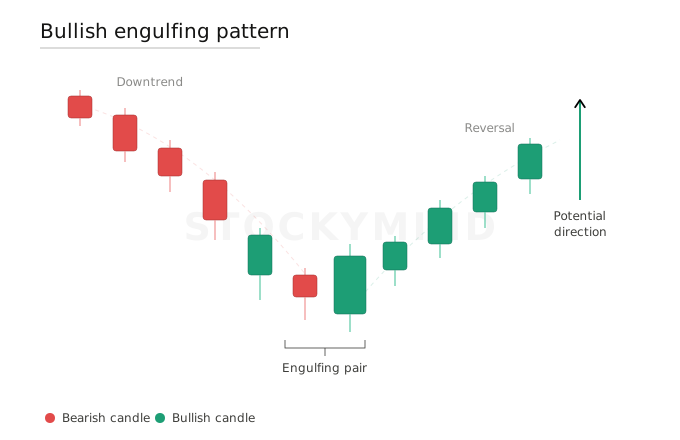
The Bullish Engulfing occurs when a large green (bullish) candle completely engulfs the body of the previous smaller red (bearish) candle. The message is clear – buyers have overwhelmed the sellers in a single session.
WHAT TO LOOK FOR:
- The green candle’s body must fully cover the red candle’s body
- The bigger the green candle relative to the red one, the stronger the signal
- Most reliable at support levels or after a sustained decline
Trading tip: A Bullish Engulfing with above-average volume at a known support zone is one of the most dependable reversal signals you’ll find.
Hammer Pattern
Single-candle pattern Reversal Appears after: Downtrend
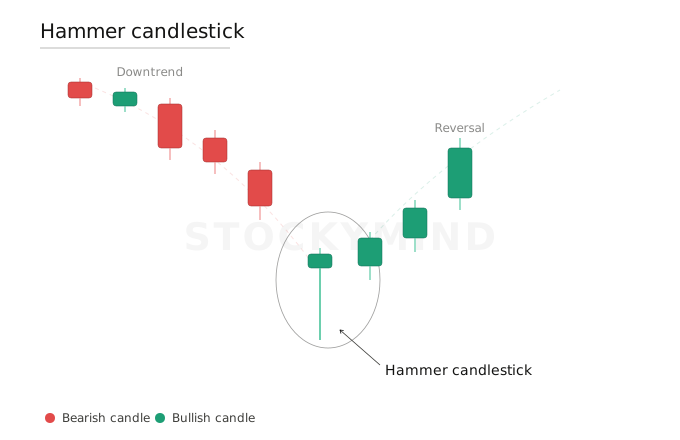
The Hammer has a small real body near the top of the candle with little or no upper shadow, and a long lower shadow that is at least twice the length of the body.
During the session, sellers pushed the price significantly lower, but buyers stepped in and drove it back up near the open. This rejection of lower prices signals that the bears may be losing their grip.
WHAT TO LOOK FOR:
- Small body at or near the top of the candle
- Lower shadow at least 2x the body length
- Little to no upper shadow
- Color of the body matters less, but a green Hammer is slightly more bullish
Trading tip: A Hammer at a major support level especially one that has held before is a high-probability reversal setup. Wait for the next candle to close bullish as confirmation before entering.
Morning Star Pattern
Three-candle pattern Reversal Appears after: Downtrend
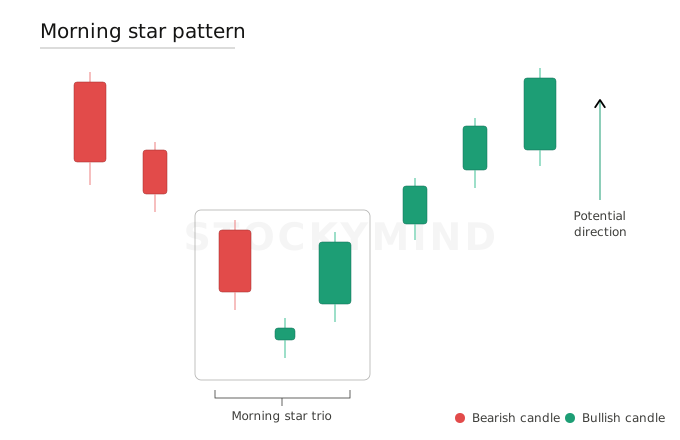
The Morning Star is a powerful bottom reversal signal that plays out over three candles:
- First candle: A tall bearish (red) candle confirming the existing downtrend.
- Second candle: A small-bodied candle (can be a Doji or spinning top) that gaps down from the first. Selling pressure is weakening and indecision is creeping in.
- Third candle: A tall bullish (green) candle that closes well into the body of the first candle, confirming the reversal.
Trading tip: A Bullish Engulfing with above-average volume at a known support zone is one of the most dependable reversal signals you’ll find.
Piercing Pattern
Two-candle pattern Reversal Appears after: Downtrend
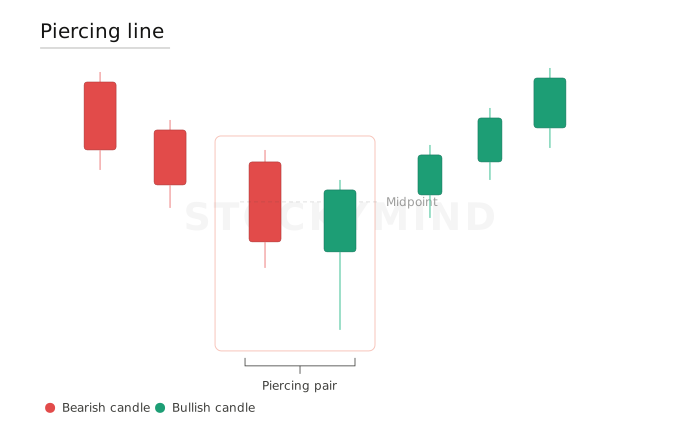
The Piercing Pattern starts with a bearish candle followed by a bullish candle that opens below the prior candle’s low but then closes above the midpoint of the first candle’s body.
The gap down at the open looks like the bears are still in charge, but the strong recovery and close above the halfway mark shows that buyers have entered the picture aggressively.
WHAT TO LOOK FOR:
- The bullish candle must open below the prior candle’s low
- It must close above the midpoint (50%) of the prior bearish candle’s body
- The further it closes into the red candle’s body, the more bullish the signal
Trading tip: The Piercing Pattern is essentially a “half-engulfing” It’s not as strong as a full Bullish Engulfing, so look for extra confirmation from volume or support levels.
Three White Soldiers Pattern
Three-candle pattern Continuation / Reversal Appears after: Downtrend or Consolidation.
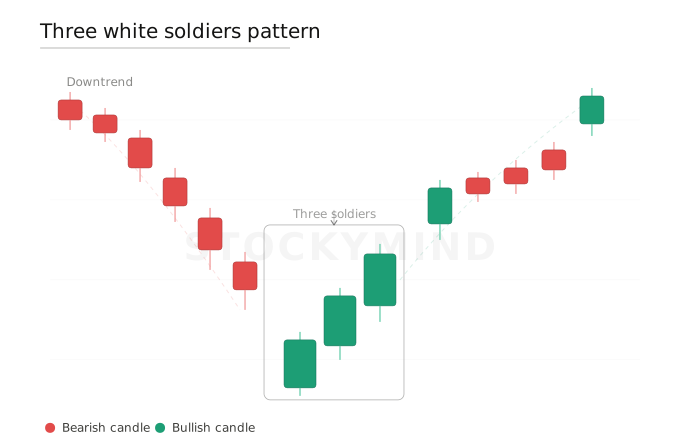
Three White Soldiers is one of the most visually unmistakable patterns, three consecutive long-bodied bullish candles, each opening within the prior candle’s body and closing at or near its high
This pattern signals strong, sustained buying pressure. Each successive candle confirms that buyers are in control and momentum is building.
WHAT TO LOOK FOR:
- Three consecutive green candles with long bodies
- Each candle opens within the body of the previous candle
- Each candle closes at or near its high (short or no upper shadows)
- Long upper wicks weaken the signal
Trading tip: Three White Soldiers is a strong signal, but be cautious if it appears after an already extended rally – at that point, the move may be overextended and due for a pullback.
Bearish Candlestick Patterns
These patterns signal that selling pressure may be taking over. Most powerful after an uptrend or at key resistance levels.
Bearish Engulfing Pattern
Two-candle pattern Reversal Appears after: Uptrend
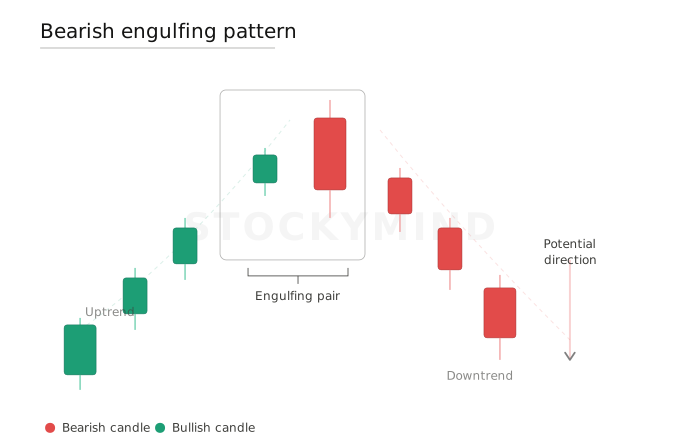
The Bearish Engulfing is the mirror image of the Bullish Engulfing. A large red (bearish) candle completely engulfs the body of the previous smaller green (bullish) candle. Sellers have decisively taken control..
WHAT TO LOOK FOR:
- The red candle’s body must fully cover the green candle’s body
- Larger engulfing candles produce stronger signals
- Most reliable at resistance levels or after a sustained rally
Trading tip: A Bearish Engulfing at a resistance level where price has been rejected before is one of the highest-probability short setups. Confirm with increasing volume for added conviction.
Hanging Man Pattern
Single-candle pattern Reversal Appears after: Uptrend
The Hanging Man looks exactly like a Hammer – small body near the top, long lower shadow, little or no upper shadow – but it appears after an uptrend instead of a downtrend.
The long lower shadow shows that sellers were able to push the price significantly lower during the session. Even though buyers recovered by the close, the fact that sellers were able to apply that much pressure after a rally is a warning sign.
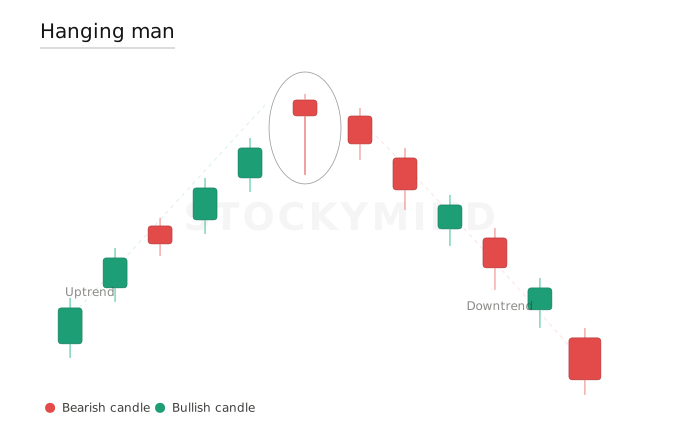
WHAT TO LOOK FOR:
- Small body near the top of the candle
- Long lower shadow (at least 2x the body)
- Appears after a clear uptrend
Trading tip: The Hanging Man is a warning, not a confirmed reversal. Wait for the next candle to close bearish before acting on it. If the price continues higher the next day, the signal is invalid.
Evening Star Pattern
Three-candle pattern Reversal Appears after: Uptrend
The Evening Star is the bearish counterpart to the Morning Star and signals a potential top:
- First candle: A tall bullish (green) candle confirming the existing uptrend.
- Second candle: A small-bodied candle that gaps up from the first. Buying pressure is weakening and indecision is setting in.
- Third candle: A tall bearish (red) candle that closes well into the body of the first candle, confirming the reversal.
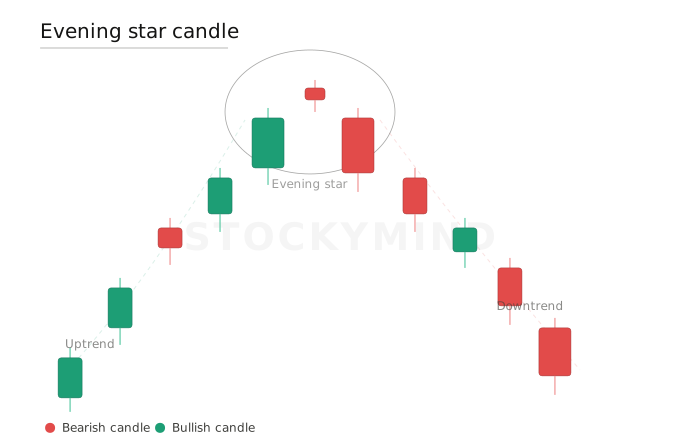
Trading tip: The Evening Star is most reliable at major resistance zones or after an extended rally. The deeper the third candle closes into the first candle’s body, the stronger the signal.
Dark Cloud Cover Pattern
Two-candle pattern Reversal Appears after: Uptrend
The Dark Cloud Cover is the bearish counterpart to the Piercing Pattern. It begins with a bullish candle, followed by a bearish candle that opens above the prior candle’s high but then closes below the midpoint of the first candle’s body.
The gap up at the open looks like the bulls are still in charge, but the sharp reversal and close below the halfway mark shows that sellers have seized control.
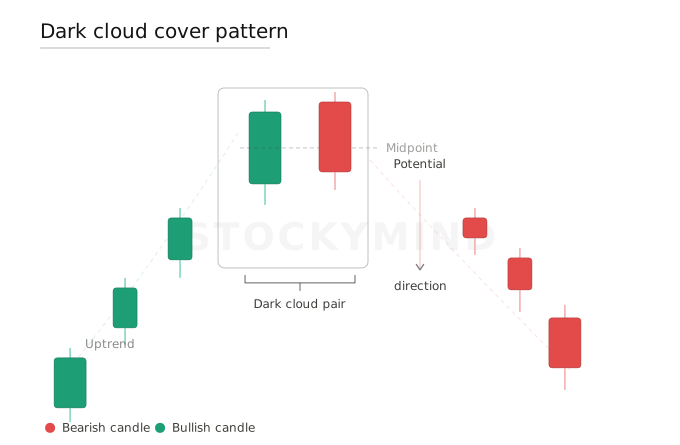
WHAT TO LOOK FOR:
- The bearish candle must open above the prior candle’s high
- It must close below the midpoint (50%) of the prior bullish candle’s body
- The further it closes into the green candle’s body, the more bearish the signal
Trading tip: Dark Cloud Cover at a resistance level, especially one where price has stalled before, is a strong setup. The gap-up open followed by a reversal traps late buyers and can accelerate the selloff.
Three Black Crows Pattern
Three-candle pattern Reversal Appears after: Uptrend
Three Black Crows is the bearish counterpart to Three White Soldiers. Three consecutive long-bodied bearish candles, each opening within the prior candle’s body and closing at or near its low.
This pattern indicates strong, sustained selling pressure. Each candle confirms that sellers are firmly in control and downside momentum is building.
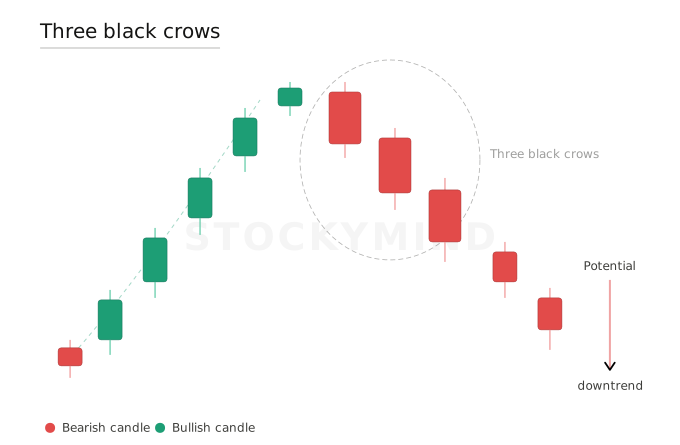
WHAT TO LOOK FOR:
- Three consecutive red candles with long bodies
- Each candle opens within the body of the previous candle
- Each candle closes at or near its low (short or no lower shadows)
- Long lower wicks weaken the signal
Trading tip: Three Black Crows appearing near a broken support level or after a failed breakout is an especially powerful bearish signal. It often marks the beginning of a more sustained decline.
How to Use Candlestick Patterns Effectively
Recognizing patterns is one thing. Using them profitably is another. Here are the rules that separate experienced traders from beginners.
Use Candlesticks as a Confirmation Tool, Not a Standalone System
Candlestick patterns should confirm what other analysis is already telling you. The most reliable signals come when the candles align with:
- The overall trend direction
- Key support and resistance levels
- Other technical indicators like moving averages and momentum oscillators
Context Is Everything
A pattern’s location on the chart matters as much as the pattern itself. A Hammer at a major support level that has held three times before is far more significant than a Hammer in the middle of a range.
Always ask: Where on the chart is this pattern forming?
Higher Timeframes Carry More Weight
A Bearish Engulfing on a daily or weekly chart is significantly more reliable than the same pattern on a 5-minute chart. Lower timeframes are noisy. Always zoom out to understand the larger trend before putting too much faith in a single candle.
Look for Clusters, Not Solo Candles
A single candle can be dismissed as noise. But when multiple candles at the same price area send the same message, especially at swing highs, swing lows, and key turning points and that’s a much stronger signal.
Confirm with Volume and Momentum
Strong candlestick signals are often backed by:
- Increased volume: More participants are behind the move
Use Candles to Time Your Entries and Exits
Candlesticks are excellent for refining timing within a broader strategy:
- Already stalking a long trade? A Bullish Engulfing at support could be your entry trigger.
- Already long? A Shooting Star near resistance may be your cue to take profits.
Common Mistakes to Avoid
- Trading patterns in isolation: Without context from trend, Support/Resistance, patterns are unreliable
- Taking counter-trend signals: A bullish pattern in a strong downtrend is often a trap, don’t fight the trend without strong confirmation.
- Relying on low-timeframe signals: 1-min and 5-min candles produce too many false signals.
- Ignoring failed patterns: Patterns fail often in choppy, sideways markets – always use a stop loss.
- Skipping confirmation: Many patterns need the next candle to confirm the signal before you act.
- Overcomplicating things: You don’t need to memorize 100 patterns, master the price action behind them.
Key Takeaways
1
Every candlestick tells a story about the open, high, low, close and the tug-of-war between buyers and sellers.
2
Bullish patterns (Bullish Engulfing, Hammer, Morning Star, Piercing) signal that buyers may be gaining the upper hand, look for them at support levels after a decline.
3
Bearish patterns (Bearish Engulfing, Hanging Man, Three Black Crows, Evening Star, Dark Cloud Cover) signal that sellers may be taking control, look for them at resistance levels after a rally.
4
Context is everything. A pattern at a key support/resistance level, confirmed by volume, is far more reliable than a random candle in the middle of a chart.
5
Higher timeframes win. Daily and weekly patterns carry much more weight than intraday signals.
6
Use candlesticks to confirm and time trades, not as a standalone system.
The bottom line: when a candlestick pattern aligns with the larger technical picture (trend direction, key levels, volume, and momentum), it can give you a genuine trading edge.
Review your charts daily, and keep practicing. Over time, you’ll start reading the stories the candles are telling as naturally as reading text on a page.
StockyMind Mentorship
Build the System That Fits Your Life
Structured trading mentorship covering setups, risk math, position sizing, and preparation routines. Designed for traders ready to stop reacting and start engineering.
Join the Next Batch →